
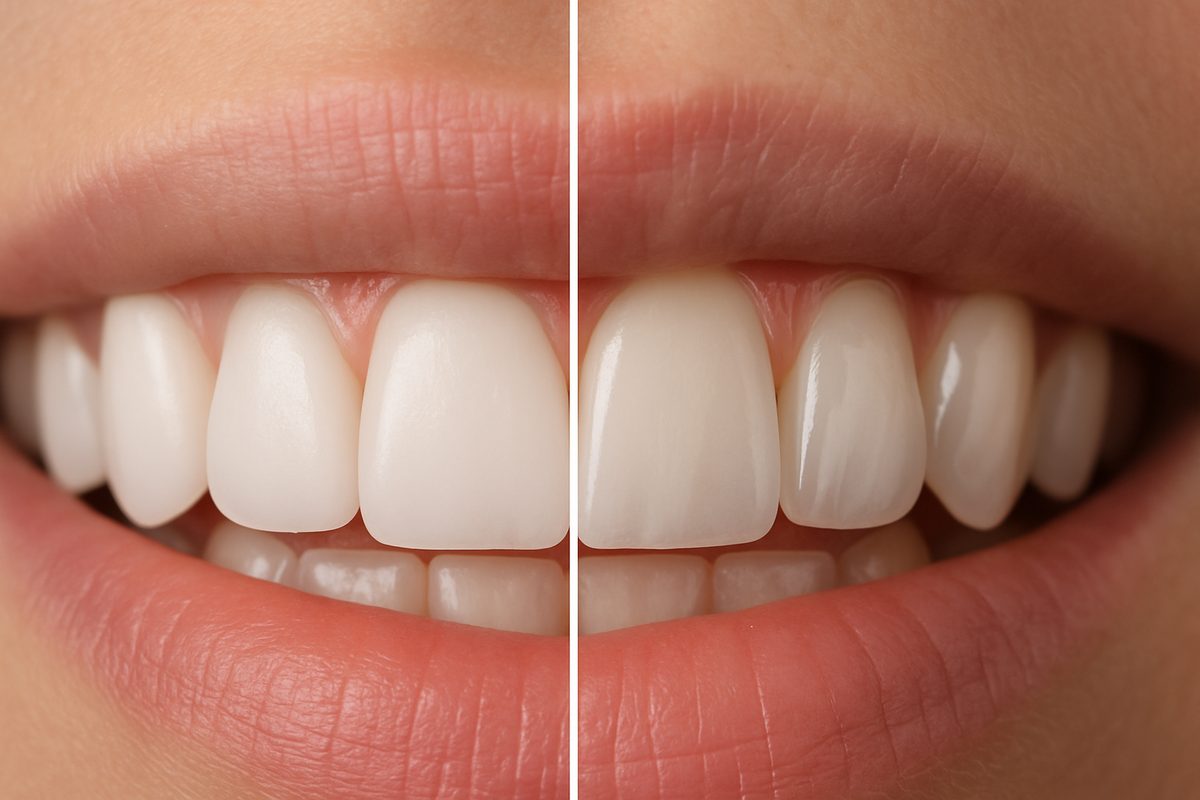
Composite and porcelain veneers both improve how your teeth look, but they differ in material, cost, durability, and upkeep. This guide explains the key differences and helps you decide whether porcelain veneers in North Jersey are the right choice for your smile.
Quick Side-By-Side: Difference Between Composite And Porcelain Veneers
Appearance: Composite can look good for small changes; porcelain offers the most natural, translucent results.
Durability: Composite lasts 5–7 years on average; porcelain lasts 10–15+ years with good care.
Cost: Composite is less expensive up front; porcelain costs more but often delivers better long-term value.
Procedure Time: Composite is often done in one visit; porcelain requires 2–3 visits for prep and lab fabrication.
Stain Resistance: Composite is more prone to staining; porcelain resists stains well.
Typical Lifespan: Composite: ~5–7 years. Porcelain: ~10–15+ years.
Takeaway: For a long-lasting, highly natural result, porcelain veneers in North Jersey are usually the better choice.
What Are Composite Veneers?
Materials And How They’re Applied
Composite veneers are made from tooth-colored resin. Dentists apply the resin directly to the tooth (direct bonding) or use lab-made composite shells that are bonded later. Direct bonding usually means a single appointment: the tooth is shaped, resin is layered and cured, then polished. Lab-made composite follows a similar bonding step but uses a preformed shell made offsite.
Pros Of Composite Veneers
– Less tooth removal required
– Lower cost up front
– Faster treatment, often same-day
– Easy to repair if chipped
Cons Of Composite Veneers
– Shorter lifespan than porcelain
– More likely to stain or chip
– May need replacement sooner
What Are Porcelain Veneers?
Materials And How They’re Fabricated
Porcelain veneers are thin ceramic laminates custom-made to fit each tooth. The dentist prepares the tooth by removing a small amount of enamel, takes impressions or digital scans, and sends them to a lab (in-house or external). The lab fabricates the porcelain restorations to exact shade and shape. On return visits the veneers are tried in, adjusted, and permanently bonded with dental cement.
Pros Of Porcelain Veneers
– Superior, natural-looking aesthetics
– Excellent stain resistance
– Longer lifespan and greater strength
– Highly customizable for shape and color
Cons Of Porcelain Veneers
– Higher cost up front
– More tooth reduction needed
– Longer turnaround time due to lab fabrication
How To Choose: Factors To Consider
Smile Goals And Desired Appearance
If you want a dramatic, long-lasting makeover, porcelain veneers in North Jersey are usually the favored option. For small fixes or temporary improvements, composite can be a good choice.
Tooth Health And Structure
If your teeth are healthy with enough enamel, veneers work well. If teeth are badly damaged, decayed, or need major strengthening, crowns or other restorations may be better than veneers.
Budget And Timeline
Composite saves money and time initially. Porcelain costs more up front but often reduces future repairs and replacements.
Maintenance And Longevity
Both types need regular brushing, flossing, and dental checkups. Porcelain resists stains and lasts longer; composite may need polishing or replacement earlier. Avoid hard bites and use a nightguard if you grind your teeth.
What To Expect During Treatment And Recovery
Typical steps: initial consult and photos, shade selection, tooth prep (minor enamel removal), impressions or scans, temporary restorations (for porcelain), final bonding or cementation, and follow-up checks. Minor sensitivity for a few days is common. Maintain good oral hygiene and avoid very hard foods for the first week.
Typical Cost Ranges And Lifespan
Costs vary by dentist, number of teeth, and lab quality. As a general guide: composite veneers often range lower per tooth, while porcelain veneers in North Jersey typically cost more per tooth but can last 10–15+ years. Higher quality labs and more complex cosmetic work raise costs but improve final results and longevity.
Why An In-House Lab And Experienced Team Matters
An in-house lab speeds turnaround and makes shade matching easier with same-office adjustments. An experienced team improves predictability, reduces remakes, and helps you get a natural result faster. These factors are especially important when choosing porcelain veneers in North Jersey.
About Genuine Smiles
Genuine Smiles serves North Jersey with multiple locations and offers porcelain veneers and laminates with an in-house lab. The practice provides personalized cosmetic planning and convenient scheduling across its offices.
Deciding And Booking A Consultation
Bring recent photos, a list of medications, and your dental history. Ask these questions at your consult:
- Am I a better candidate for composite or porcelain veneers?
- How many teeth should be treated for a natural look?
- Can I see before-and-after photos of similar cases?
- Do you use an in-house lab for veneers?
- What is the full cost and payment/financing options?
Ready to explore options? Schedule a cosmetic consultation to see whether composite or porcelain veneers in North Jersey best fits your goals and budget.