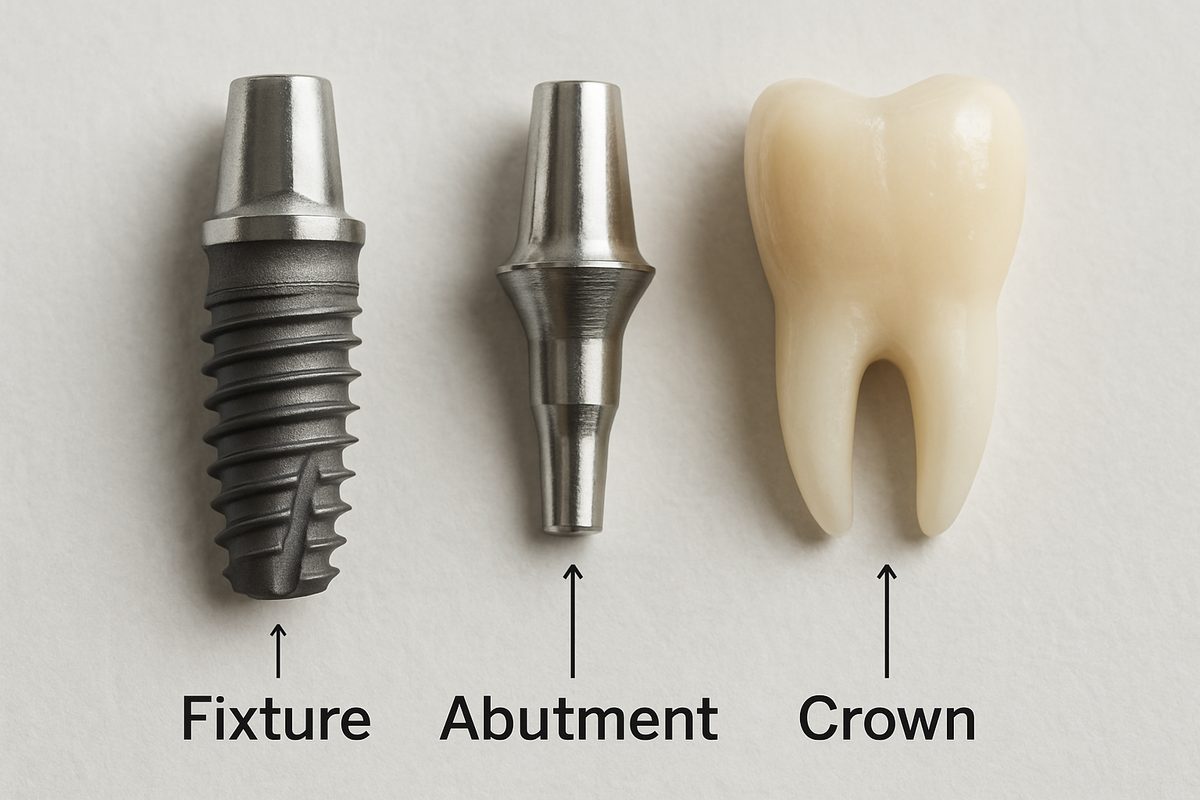
If you’ve ever wondered what is a dental implant made of in North Jersey, this article will answer that question clearly. A dental implant replaces a missing tooth using three main parts: the fixture (the root), the abutment (the connector), and the crown (the visible tooth). Material choice for each part matters for strength, looks, and long-term success. Read on to learn what each piece is made of and why it matters for your smile.
Basic Components Of A Dental Implant
The three core parts work together to restore function and appearance:
- Fixture (implant root) — Anchors into the jawbone and needs to bond with bone.
- Abutment (connector) — Joins the fixture to the crown and must be strong and stable.
- Crown (visible tooth) — Matches your natural teeth in color and shape and must be esthetic and durable.
Each part has different material needs: the fixture focuses on biocompatibility and bone bonding, the abutment on strength and soft-tissue fit, and the crown on esthetics and wear resistance.
Implant Fixture Materials
Titanium And Titanium Alloys
Titanium is the most common material for the implant fixture. It’s highly biocompatible, meaning the body accepts it well. Titanium bonds to bone through a process called osseointegration, creating a stable foundation for chewing. Titanium alloys add strength and are used in most implant systems because they combine durability with a long track record of success.
Zirconia (Ceramic) Fixtures
Zirconia implants are metal-free ceramic options. They’re chosen for better esthetics under thin gums and for patients who prefer non-metal materials. Zirconia can look more natural at the gumline and may reduce visible dark lines. Trade-offs include less long-term data compared to titanium and special placement considerations, so dentists select them case-by-case.
Surface Treatments And Coatings
Modern implants often use surface treatments to speed and strengthen bone integration. Roughened surfaces, hydroxyapatite coatings, and other technologies increase surface area and encourage bone to attach. These advances help implants heal faster and last longer.
Abutment Material Choices
Abutments connect the fixture to the crown and must balance strength and esthetics:
- Titanium abutments — Very strong and common, ideal for back teeth and heavy bites.
- Zirconia abutments — Offer superior esthetics for front teeth because they match tooth color and don’t show through gums.
- Hybrid options — Titanium bases with zirconia collars give strength plus a natural gumline appearance.
Choice depends on gum thickness, tooth position, and the crown material you plan to use.
Crown/Restoration Materials For Implant Teeth
All-Ceramic Crowns (Zirconia, Lithium Disilicate)
All-ceramic crowns are highly esthetic and can be very strong. Zirconia crowns offer excellent strength for back teeth while still offering good looks. Lithium disilicate (e.g., e.max) gives great translucency and is often used for front teeth where natural appearance matters most.
Porcelain-Fused-To-Metal And Metal Crowns
Metal-backed crowns (porcelain-fused-to-metal or full metal) are chosen when maximum strength is needed—often for molars or patients with heavy bite forces. They trade a bit of esthetics for durability but remain reliable in high-stress situations.
How Material Choice Affects Longevity And Health
Materials impact implant survival through biocompatibility, corrosion resistance, and strength. Titanium and modern ceramics resist corrosion and integrate well with bone. Proper hygiene and placement are just as important as material choice for long-term success. Rarely, some people report titanium sensitivity; in those cases, zirconia may be an alternative. Implants do not set off metal detectors and MRI safety is generally fine—your dentist will advise if special steps are needed.
How Dentists Choose The Right Materials For You
Dentists consider many personal factors when choosing materials:
- Tooth position (front vs. back)
- Smile and esthetic goals
- Bite force and chewing habits
- Gum thickness and bone quality
- Medical history (smoking, diabetes) and allergies
- Budget and insurance and financing options
A personalized plan matches materials to your needs for the best long-term outcome.
Quick Patient FAQ
- Are implants safe? Yes. They’re a well-established treatment with high success rates.
- Will they set off metal detectors? No, modern implants won’t trigger detectors.
- Can implants cause metal poisoning? Extremely unlikely—titanium is highly biocompatible.
- How long do implant parts last? With proper care, many implant fixtures and restorations last for decades; crowns and abutments may need replacement sooner due to wear.
Why Choose Genuine Smiles For Implant Care
At Genuine Smiles, our team provides comprehensive implant care across North Jersey. We offer in-house implant planning and lab work to speed treatment and control quality. Our dentists have advanced training and use modern imaging and surface technologies to pick the best materials for each patient’s needs.
Next Steps: Getting Evaluated For An Implant
To learn what is a dental implant made of in North Jersey for your case, schedule a consult. Expect digital imaging, a medical review, and a discussion about material options for your specific tooth position and goals. We accept many insurance plans and offer financing to make care affordable. Contact Genuine Smiles to book an evaluation and get a clear, personalized plan for your implant.