
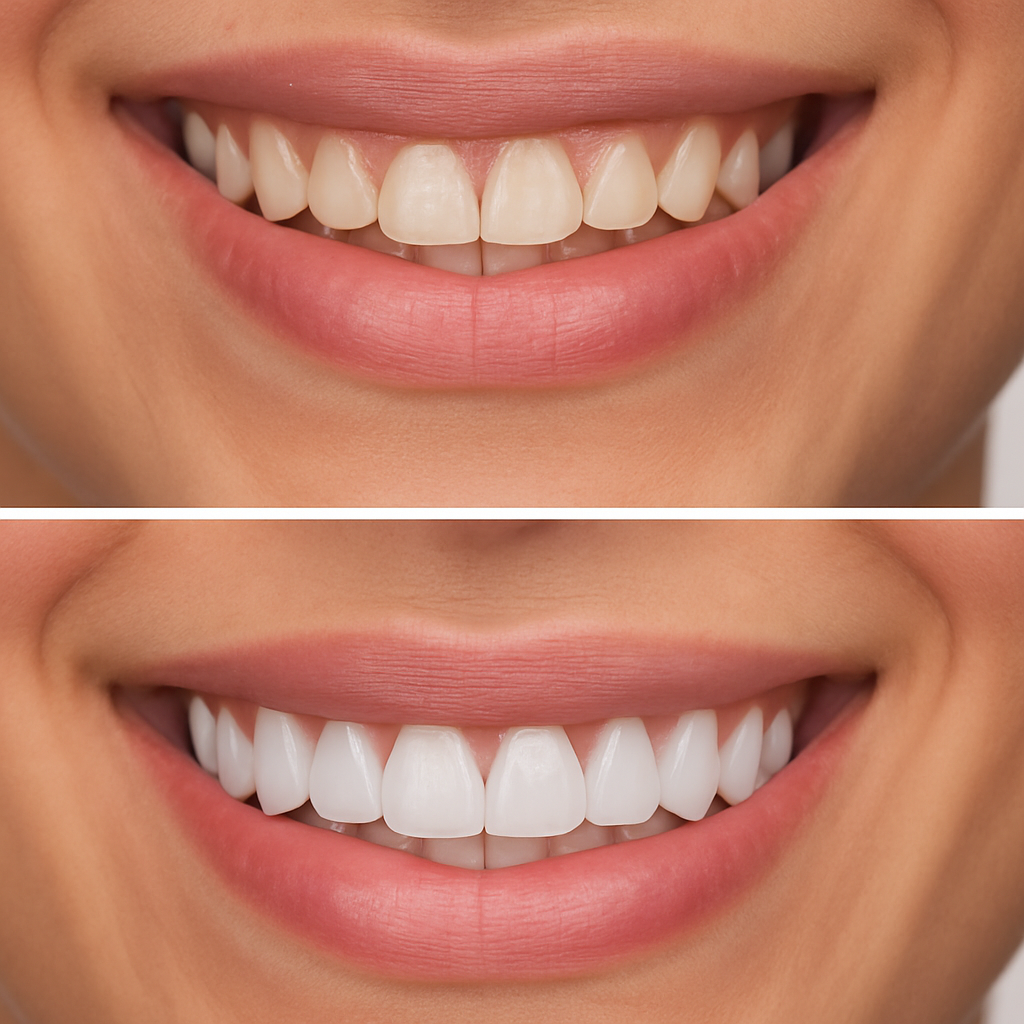
Veneers that go over your teeth are thin shells placed on the front visible surface of teeth to change color, shape, or size. People choose them to hide stains, close small gaps, fix chips, or create a more even smile. This short guide explains what over-the-tooth veneers are, the types available, who is a good candidate, the procedure, care and costs, and next steps so you can decide if veneers that go over your teeth are right for you.
What Are Veneers That Go Over Your Teeth?
Over-the-tooth veneers are coverings bonded to the front of teeth. Unlike extensive restorations, they focus on the visible surface. Traditional veneers usually require some enamel removal; over-the-tooth options can include full-coverage porcelain shells or thinner laminates. Materials include porcelain, composite resin, and ultra-thin options like Lumineers. They cover stains and reshape teeth without changing the tooth’s core structure.
Types Of Over-The-Tooth Veneers
Porcelain Veneers
Porcelain veneers look most natural and resist staining. They’re durable and mimic tooth translucency well. The downside: they often require more tooth preparation and lab work, which raises cost and time.
Composite Resin Veneers
Composite resin is placed directly on the tooth by the dentist. It’s less expensive and can often be done in one visit. Composite wears faster, can chip more easily, and stains sooner than porcelain.
Lumineers / Ultra-Thin Laminates
Lumineers are very thin porcelain laminates that often need minimal or no enamel removal. They preserve more tooth structure and can be reversible in some cases. However, they may not work for every tooth shape or severe alignment issue.
Who Is A Good Candidate?
Good candidates want to hide stains, repair small chips, close gaps, or change tooth shape. You need generally healthy teeth and gums. Veneers that go over your teeth may not be appropriate if you have untreated decay, active gum disease, severe bite problems, or very little enamel. A dentist will assess your oral health and discuss alternatives like bonding, crowns, or orthodontics if needed.
What To Expect During The Procedure
Expect an initial consult and exam, then impressions or a digital scan. Tooth prep varies by veneer type—some require minor shaping, others none. A lab makes porcelain veneers; you may get temporaries while you wait. Final placement involves checking fit, shade, and bonding to the tooth. Timeline: 1–3 visits over 2–6 weeks for lab-made porcelain; composite can be completed in one appointment.
Care, Lifespan, And Common Risks
Care includes good oral hygiene, regular dental cleanings, and avoiding biting hard items. Avoid smoking and staining foods to preserve margins. Lifespan: composite 5–7 years, porcelain 10–15+ years with care. Risks include sensitivity, chipping, margin staining, or needing replacement over time. Nightguards help if you grind teeth.
Cost, Insurance, And Financing Options
Costs vary by material, number of teeth, and lab fees. Porcelain is pricier than composite. Many dental plans limit cosmetic coverage; check your policy. Practices often offer financing or payment plans to spread cost.
Why Consider Genuine Smiles For Veneers
Genuine Smiles offers in-house porcelain veneers and Lumineers with an on-site lab to speed adjustments. Their team of experienced New Jersey dentists provides cosmetic and restorative care across multiple North Jersey offices, plus evening and weekend hours to fit busy schedules.
Next Steps & Call To Action
If you’re considering veneers that go over your teeth, book a consultation to review goals, photos, and x-rays. Bring any prior dental records and a list of questions. Contact the office to schedule an exam and get a personalized plan.